

In the realm of fiber - optic networking, MTP/MPO fiber cables have emerged as a crucial component, offering high - density and efficient data transmission. However, the requirements for managing these cables can vary significantly between small and large networks. As a trusted MTP MPO Fiber Accessories supplier, I am well - positioned to explore the distinctions in MTP/MPO fiber cable management solutions for networks of different scales.
1. Understanding MTP/MPO Fiber Cables
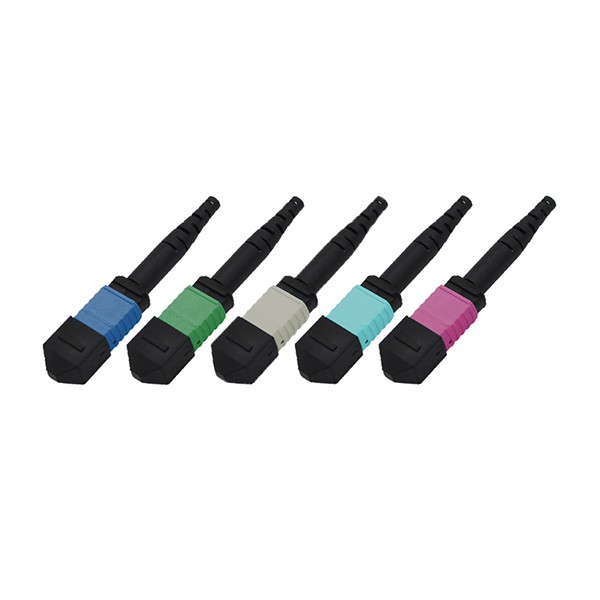
Before delving into the management solutions, it's essential to understand what MTP/MPO fiber cables are. MPO (Multi - fiber Push - On) is a type of fiber optic connector that can accommodate multiple fibers in a single connector, typically ranging from 2 to 72 fibers. MTP is an enhanced version of the MPO connector, known for its higher precision and better performance. These connectors are widely used in data centers, local area networks (LANs), and other high - speed communication systems due to their ability to save space and reduce installation time.
2. Cable Management in Small Networks
2.1 Space and Infrastructure
Small networks, such as those in small businesses, home offices, or educational institutions with limited connectivity needs, usually have less physical space. As a result, the cable management solutions need to be compact. For example, small network racks may be used to house the networking equipment and cables. These racks are designed to be space - efficient, often with a smaller footprint compared to those used in large data centers.
In terms of cable routing, small networks can rely on simple cable trays or channels. These are easy to install and can effectively organize the MTP/MPO cables, preventing them from tangling. For example, a small business might use a wall - mounted cable tray to route the cables from the network switch to the servers or workstations.
2.2 Cost - effectiveness
Cost is a significant factor in small networks. Small businesses and home users often have limited budgets for network infrastructure. Therefore, the MTP/MPO fiber cable management solutions need to be cost - effective. This may include using basic cable ties and Velcro straps to secure the cables. These simple tools are inexpensive and can still provide adequate cable management.
When it comes to connectors and adapters, small networks may opt for more budget - friendly options. For instance, the 12F Multimode MPO Connector can be a suitable choice for small - scale multimode fiber connections. This connector offers reliable performance at a relatively low cost, making it ideal for small networks with limited bandwidth requirements.
2.3 Simplicity of Installation and Maintenance
Small networks usually do not have dedicated IT staff with extensive expertise in fiber - optic technology. As a result, the MTP/MPO fiber cable management solutions need to be easy to install and maintain. Plug - and - play connectors are highly preferred, as they can be easily connected and disconnected without the need for specialized tools or skills.
For maintenance, simple visual inspection of the cables and connectors is often sufficient. If a problem occurs, it is relatively easy to trace the cables and identify the faulty component in a small network. For example, if there is a signal loss, the IT staff can quickly check the cable connections and connectors to find the source of the problem.
3. Cable Management in Large Networks
3.1 High - density Space Requirements
Large networks, such as those in major data centers or large enterprises, have a high demand for high - density cable management. These networks often handle a vast amount of data traffic, requiring a large number of MTP/MPO fiber cables. To accommodate these cables, high - density patch panels and racks are essential.
High - density patch panels can hold a large number of MPO connectors, allowing for efficient cable termination and connection. For example, a large data center may use patch panels that can accommodate hundreds of MPO connectors, enabling seamless connection between different network devices. Racks in large networks are also designed to be modular and scalable, allowing for easy expansion as the network grows.
3.2 Redundancy and Reliability
In large networks, downtime can result in significant financial losses. Therefore, redundancy and reliability are crucial factors in MTP/MPO fiber cable management. This includes having redundant cables and connectors to ensure that the network can continue to operate in case of a failure.

For example, a large enterprise may have a dual - path fiber optic network, where two sets of MTP/MPO cables are used to connect critical network devices. In the event of a cable break or connector failure in one path, the other path can still maintain the network connection. Additionally, advanced monitoring systems are used to continuously monitor the performance of the cables and connectors, detecting any potential problems before they cause a network outage.
3.3 Complexity of Cable Routing
Large networks often have a complex cable routing infrastructure. The cables need to be routed through multiple floors, rooms, and equipment racks. This requires a more sophisticated cable management system, such as dedicated cable raceways and ducts.
Cable raceways are used to guide the cables along a specific path, protecting them from physical damage and interference. Ducts, on the other hand, can be used to group multiple cables together and provide a more organized and protected routing solution. In addition, color - coding and labeling systems are commonly used in large networks to identify different cables and their destinations, making it easier to manage and troubleshoot the network.
When it comes to connectors and adapters in large networks, high - quality and high - performance options are preferred. For example, the 12F Singlemode MPO Connector is suitable for long - distance and high - speed single - mode fiber connections commonly found in large - scale networks. And the MPO Multimode Fiber Adapter can provide reliable mating for multimode fiber connections in large networks, ensuring efficient data transmission.
4. Conclusion
In conclusion, the difference between MTP MPO fiber cable management solutions for small and large networks lies in various aspects, including space requirements, cost - effectiveness, simplicity of installation and maintenance, redundancy, and complexity of cable routing. Small networks prioritize compactness, cost - efficiency, and ease of use, while large networks focus on high - density space management, reliability, and complex cable routing.
As a MTP MPO Fiber Accessories supplier, we understand the diverse needs of our customers. Whether you are running a small business or a large - scale data center, we can provide you with the right MTP/MPO fiber cable management solutions. If you are interested in purchasing our products or discussing your specific network requirements, please feel free to contact us for procurement negotiations.
References
- "Fiber Optic Network Design and Implementation Handbook", John Wiley & Sons
- "Data Center Cabling: Best Practices for High - Performance Networks", Cisco Press
- Industry whitepapers on MTP/MPO fiber technology from leading fiber optic manufacturers.