

In the realm of high - speed data transmission, fiber optic cables play a pivotal role. Among the various types of fiber optic cables, MTP MPO fiber trunk cables and distribution cables are two important categories. As a trusted supplier of MTP MPO Fiber Accessories, I am here to delve into the differences between these two types of cables, which will help you make more informed decisions when it comes to your fiber optic network setup.

1. Structure and Design
MTP MPO Fiber Trunk Cables
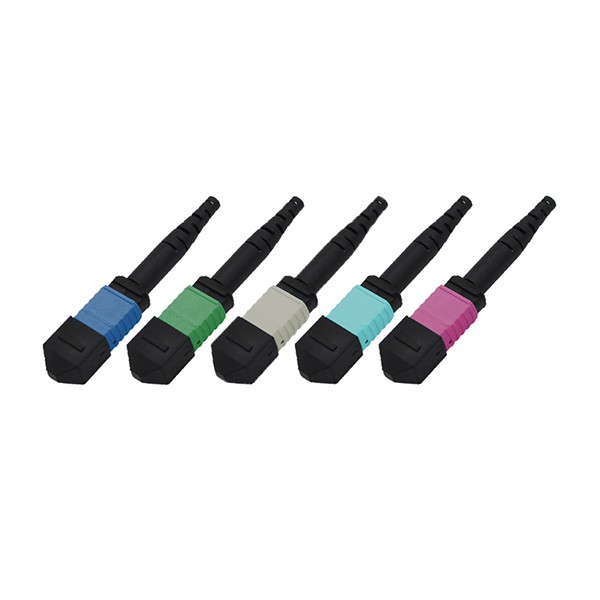
MTP (Multi - fiber Termination Push - on) and MPO (Multi - fiber Push - on) fiber trunk cables are designed to handle multiple fibers in a single connector. These cables typically have a high fiber count, often ranging from 12 to 144 fibers or even more. The MTP/MPO connectors at the ends of the trunk cables are precision - engineered to align multiple fibers accurately.
The construction of MTP MPO trunk cables usually involves a tight - buffered or loose - tube design. In a tight - buffered design, each individual fiber is surrounded by a protective buffer layer, which provides mechanical protection and makes the cable more flexible. Loose - tube designs, on the other hand, have fibers placed in a loose tube filled with a gel or other filling material to protect against moisture and mechanical stress.
Distribution Cables
Distribution cables, in contrast, are more focused on delivering individual fibers to specific endpoints. They usually have a lower fiber count compared to trunk cables, often ranging from 2 to 24 fibers. Distribution cables are designed to be more flexible and easier to install in smaller spaces, such as in a data center rack or a building's internal wiring.
The structure of distribution cables often features a jacketed design, where individual fibers are bundled together and then covered by an outer jacket. This jacket provides protection against environmental factors such as dust, moisture, and physical damage.
2. Application Scenarios
MTP MPO Fiber Trunk Cables
MTP MPO fiber trunk cables are commonly used in high - density data center environments. In a large - scale data center, where there is a need to connect multiple servers, storage systems, and network switches, MTP MPO trunk cables can provide a high - speed, high - capacity connection. For example, in a data center with hundreds of servers, MTP MPO trunk cables can be used to connect the core network switches to the server racks, enabling fast data transfer between different parts of the data center.
They are also suitable for long - distance connections within a campus or between different buildings. Since MTP MPO trunk cables can support a large number of fibers in a single cable, they can reduce the number of cables needed for long - distance runs, which simplifies the cable management and reduces installation costs.
Distribution Cables
Distribution cables are mainly used for the last - mile connection in a fiber optic network. They are used to connect individual devices, such as computers, printers, and IP phones, to the network infrastructure. In a commercial building, distribution cables can be used to connect the network outlets in each office to the patch panel in the telecommunications room.
Distribution cables are also used in residential applications, such as in fiber - to - the - home (FTTH) projects. In an FTTH installation, distribution cables are used to connect the optical network terminal (ONT) in the customer's home to the individual devices, providing high - speed internet access.
3. Performance Characteristics
MTP MPO Fiber Trunk Cables
MTP MPO fiber trunk cables are designed to provide high - speed data transmission over long distances. They can support data rates of up to 400Gbps or even higher, making them suitable for applications that require high - bandwidth, such as data center networking, cloud computing, and high - definition video streaming.
The insertion loss of MTP MPO connectors is relatively low, which ensures that the signal strength is maintained over long distances. Additionally, the return loss of MTP MPO connectors is high, which means that less signal is reflected back to the source, reducing signal interference.
Distribution Cables
Distribution cables are also capable of providing high - speed data transmission, but they are usually optimized for shorter distances. They can support data rates of up to 10Gbps or 25Gbps, which is sufficient for most residential and small - to - medium - sized commercial applications.
The performance of distribution cables is more focused on flexibility and ease of installation. They are designed to have a lower bending radius, which allows them to be easily routed around corners and through tight spaces.
4. Compatibility and Accessories
MTP MPO Fiber Trunk Cables
MTP MPO fiber trunk cables require specific accessories to work properly. For example, MPO Multimode Fiber Adapter is used to connect two MTP MPO trunk cables or to connect an MTP MPO trunk cable to a network device. These adapters are designed to ensure proper alignment of the fibers, which is crucial for maintaining high - quality signal transmission.
12F Multimode MPO Connector is another important accessory for MTP MPO trunk cables. It is used to terminate the cable and provide a connection point. There are also MPO Singlemode Fiber Adapters MPO Singlemode Fiber Adapter available for single - mode MTP MPO trunk cables, which are used in applications that require long - distance, high - speed data transmission.
Distribution Cables
Distribution cables are more commonly used with standard fiber optic connectors, such as SC, LC, and ST connectors. These connectors are widely available and are compatible with a variety of network devices. Accessories for distribution cables include patch cords, splice closures, and cable management systems, which are used to connect the distribution cables to the network and to organize the cables in a neat and orderly manner.
5. Cost Considerations
MTP MPO Fiber Trunk Cables
The cost of MTP MPO fiber trunk cables is relatively high compared to distribution cables. This is mainly due to the high fiber count and the precision - engineered connectors. The cost of the accessories, such as MPO adapters and connectors, also adds to the overall cost. However, in large - scale data center projects, the use of MTP MPO trunk cables can reduce the total cost of ownership in the long run, as they can simplify cable management and reduce installation time.
Distribution Cables
Distribution cables are generally more cost - effective, especially for small - scale applications. Since they have a lower fiber count and use standard connectors, the cost of the cables and the accessories is relatively low. This makes them a popular choice for residential and small - to - medium - sized commercial applications.
Conclusion
In summary, MTP MPO fiber trunk cables and distribution cables have distinct differences in structure, application scenarios, performance characteristics, compatibility, and cost. As a supplier of MTP MPO Fiber Accessories, I understand the unique requirements of different customers and can provide the most suitable solutions for your fiber optic network.
Whether you are building a large - scale data center or a small - scale residential network, choosing the right type of cable is crucial for the performance and reliability of your network. If you have any questions about MTP MPO fiber trunk cables, distribution cables, or our MTP MPO Fiber Accessories, please feel free to contact us for a detailed discussion and procurement negotiation. We are committed to providing high - quality products and excellent service to meet your needs.
References
- "Fiber Optic Cabling Installation and Troubleshooting" by Premier Farnell
- "Data Center Cabling: Best Practices" by Cisco Systems
- "Fiber Optic Network Design and Implementation" by Corning Incorporated